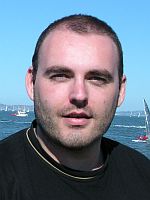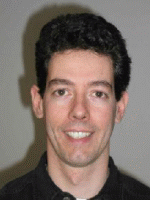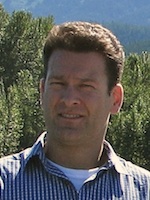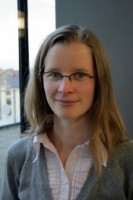
The success of the initial program phase of the Max Planck Center (2003 – 2009) has far exceeded the initial expectations. The flexibility of the virtual institute concept has allowed a highly dynamic research program to blossom and remain fresh through the continuous influx of new postdocs and Ph.D. students. Not only has a young elite of researchers returned to Germany after a period of productive research and intellectual growth, the majority of postdocs working in the Center has now won faculty appointments or senior researcher positions in industry in Germany or elsewhere.
You can find their current websites listed below, or visit their former research group profiles through the right-hand navigation.
- Dr. Pierpaolo Baccichet
OnLive, Palo Alto, USA - Prof. Dr. Volker Blanz
Media Informatics, University of Siegen, Germany - Dr. Markus Flierl
KTH, Stockholm, Sweden - Prof. Dr. Stefan Funke
Institute of Formal Methods in Computer Science, Division of Algorithmic, University of Stuttgart, Germany - Prof. Dr. Joachim Giesen
Theoretical Computer Science, Friedrich Schiller University of Jena, Germany - Prof. Dr. Stefan Gumhold
Computergraphics and Visualization, Faculty of Computer Science, TU Dresden, Germany - Prof. Dr. Hendrik Lensch
Computer Graphics, Tübingen University, Germany - Prof. Dr. Marcus Magnor
Computer Graphics, TU Braunschweig, Germany - Prof. Dr. Meinard Müller
Semantische Audiosignalverarbeitung, University Erlangen-Nürnberg, Germany - Prof. Dr. Bodo Rosenhahn
Automated Image Interpretation, Leibniz-University of Hannover, Germany - Dr. Mike Sips
GFZ German Research Centre for Geosciences, Potsdam, Germany - Dr. Robert Strzodka
Computational Fluid Dynamics, Nvidia Corp., U.S.A. - Prof. Dr. Holger Theisel
Visual Computing, University of Magdeburg, Germany - Prof. Dr. Christian Theobalt
Graphics, Vision & Video, Max Planck Institute for Informatics & Saarland University, Germany - Dr. Martin Wicke
Berkeley, University of California, USA - Prof. Dr. Thomas Wiegand
Image Processing & Image Communication, Heinrich Hertz Institute & TU Berlin, Germany